
Services: Your Master Service for Piano & Grand piano
A piano lives. It reacts to its surroundings, its action are claimed, and its sound character changes. As your master piano technician, I not only make sure that your instrument is tuned – I make sure that it can develop its full potential.
My aim is to create the perfect interplay of sound (acoustics) and feeling (action). Whether tuning, maintenance, repair or the demanding voicing: With me you get all master quality services from a single source.

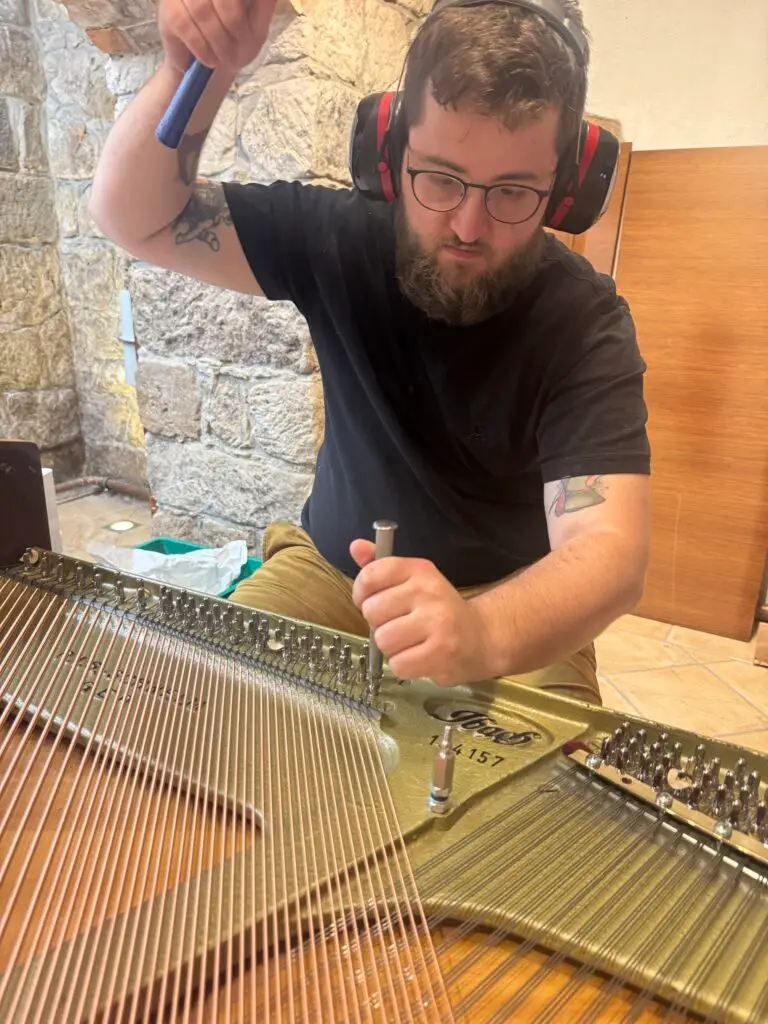
Piano Tuning: for the perfect sound & value retention
Why is a piano upset at all? The main reason is fluctuations in humidity and temperature. The wood of the soundboard – the heart of the sound generation – reacts to this: It expands when it is damp (swells) and contracts when it is dry (shrinks).
These minimal movements change the tension of the thousands of kilograms of traction loaded on the strings. The instrument sounds “upset”.
A professional tuning by the master’s hand not only compensates for this, but also ensures pure, clear acoustics and is the most important measure to preserve the value of your instrument.
Recommendation: In order to keep the sound optimal and the instrument stable, I recommend a tuning at least once, ideally twice a year (after the beginning and end of the heating period).
Regulation & Voicing: When the tuning alone is not enough
I often hear from customers: “The piano is freshly tuned, but it feels cumbersome” or “The sound is too pointed/too dull for me.” Here lies the difference between a pure “voice” and a master piano technician.
The regulation (the playing feel)
The action of a piano are made up of thousands of parts that need to mesh precisely. There are minimal deviations from playing and climatic changes.
When adjusting, I adjust the entire action and keyboard according to exact manufacturer specifications.
Your added value: The result is a perfectly even, precise and light feel. The instrument’s “fatigue” disappears and full dynamic control returns.
The voicing (the timbre)
If the action are perfectly regulated, I dedicate myself to voicing (timing color design). Here the hammer head felt is processed to shape the sound character.
Your added value: Depending on your wishes, the sound can be made more brilliant, softer, warmer or clearer. Blunt tones come alive again, sharp tones are mitigated. This is the high art of piano making that gives your instrument its individual voice.
Regulation & Voicing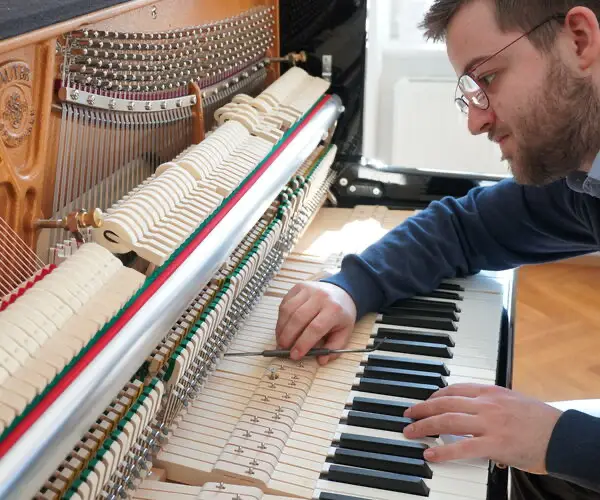
Repair & Service Maintenance
From the clamping button to a disturbing background noise to worn parts: Wear is normal, but must be repaired properly to avoid consequential damage.
I carry out all repairs – whether small or large – with the greatest care and high-quality spare parts. The aim is always to restore the function and reliability of your instrument as quickly as possible.
Service maintenance: Regular maintenance (e.g. cleaning the action, tightening screws) prevents many problems and ensures the longevity of your piano.
Repair & Service Maintenance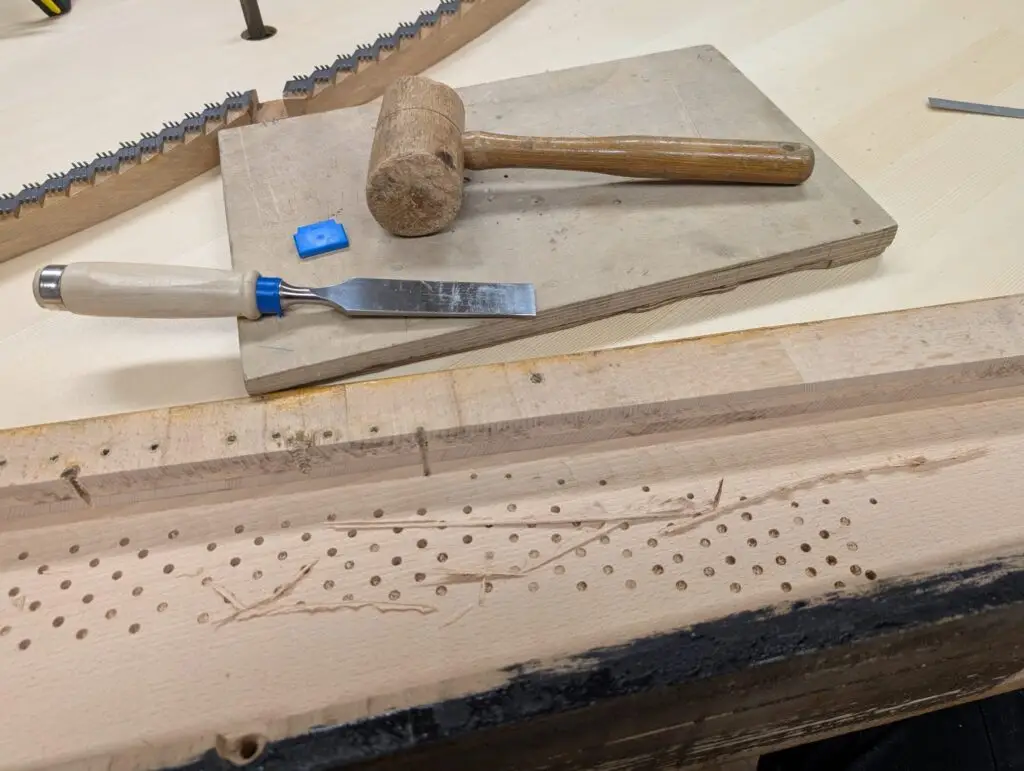
Complete restoration: the rebirth of your instrument
A piano is often an heirloom, an emotional value. If a simple repair is no longer sufficient, a complete restoration is the way to preserve a next-generation tool.
In the case of a complete restoration, the instrument is fully repaired. This can include:
- Acoustic system overhaul (e.g. soundboard, bars, new stringing)
- Comprehensive action and keyboard overhaul (e.g. new hammers, damping)
- Surface reprocessing (housing)
Such an overhaul often not only restores the original sound quality and the playing feel, but even improves it.
complete restoration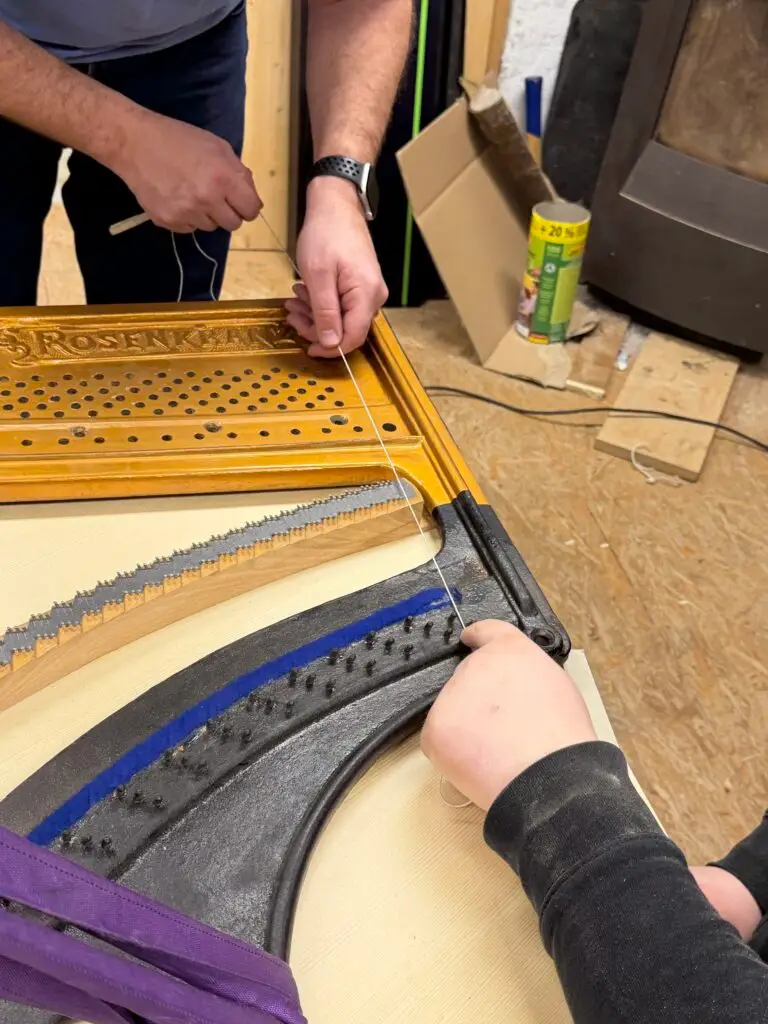
Value Retention, Concerts & Transports
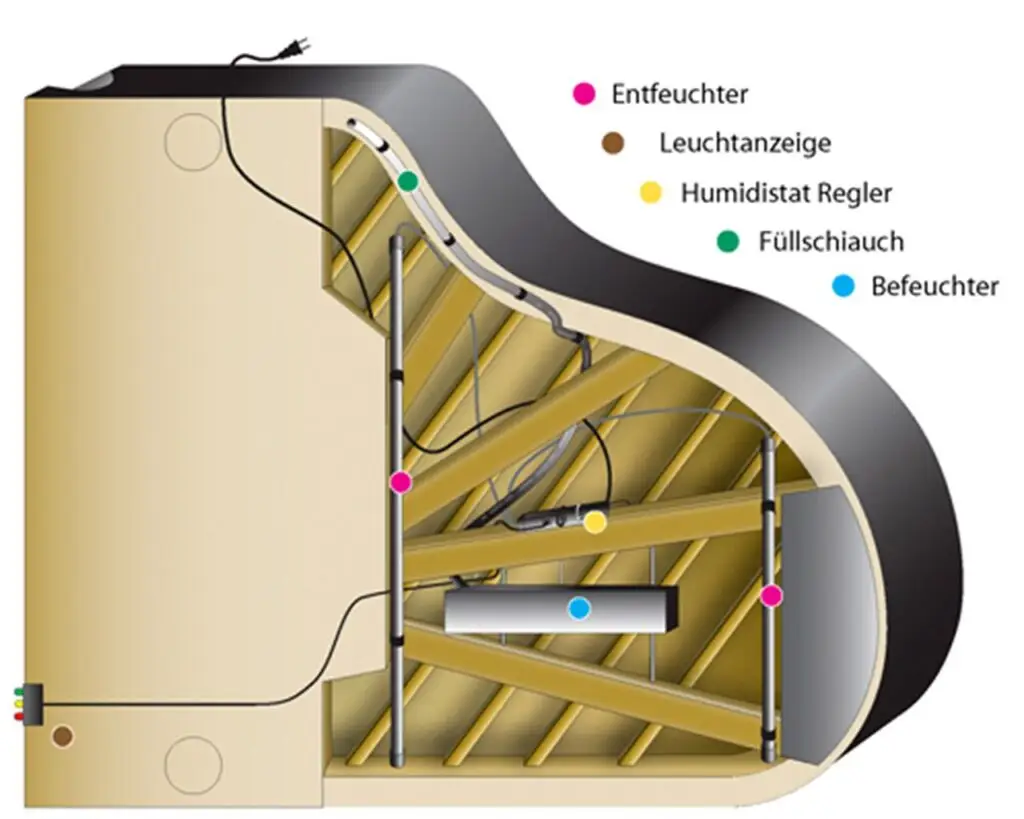
Piano Life Saver Air Conditioning Systems
A stable microclimate directly in the instrument – for a more stable tuning and protection against cracks.
Learn more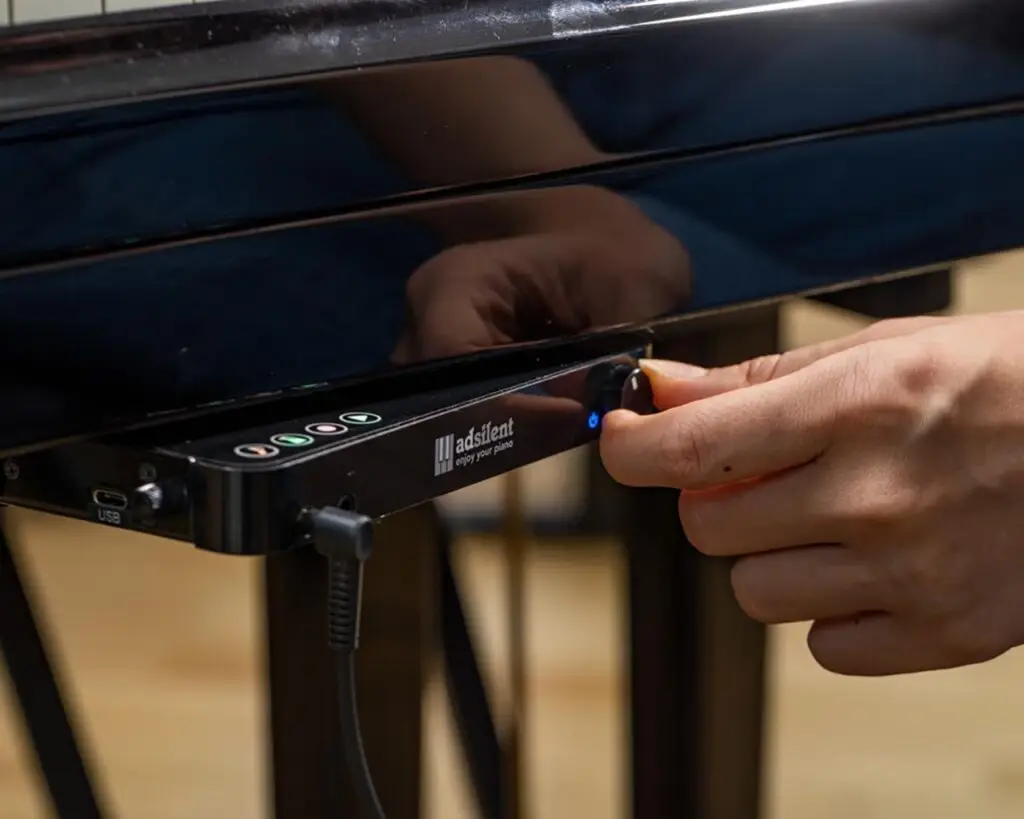
concert service
The tuning and preparation of your grand piano for concerts, recordings and events.
Learn more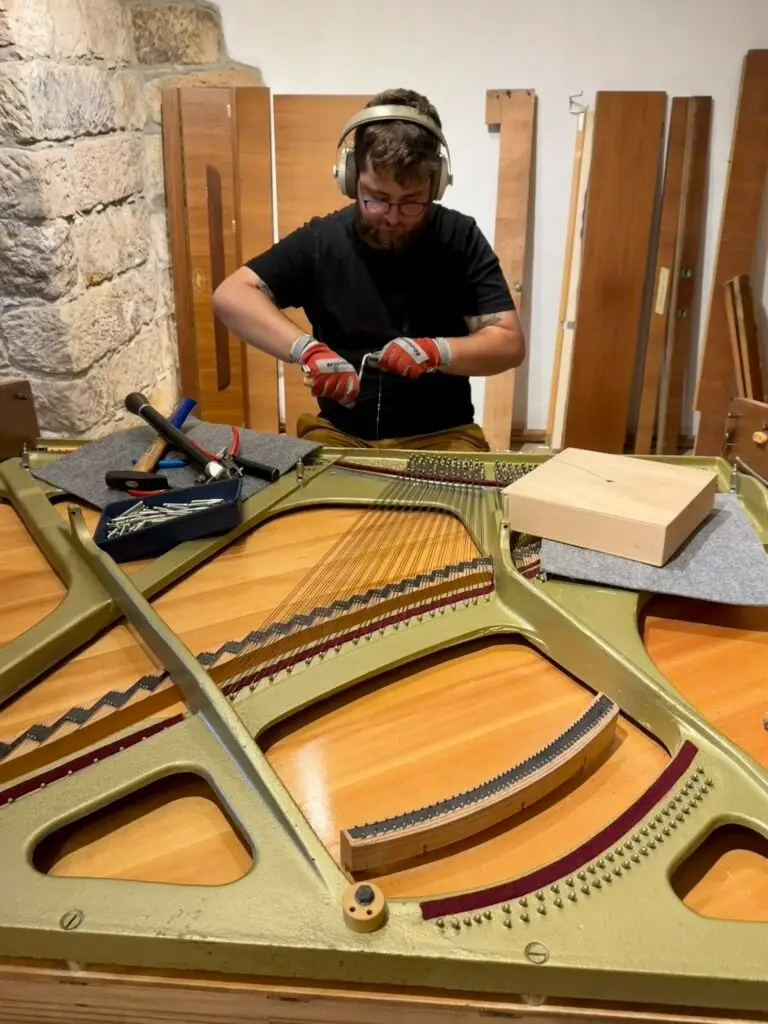
piano transports
Safe transport of piano and grand piano with insured partner forwarders – simply inquire online.
Learn more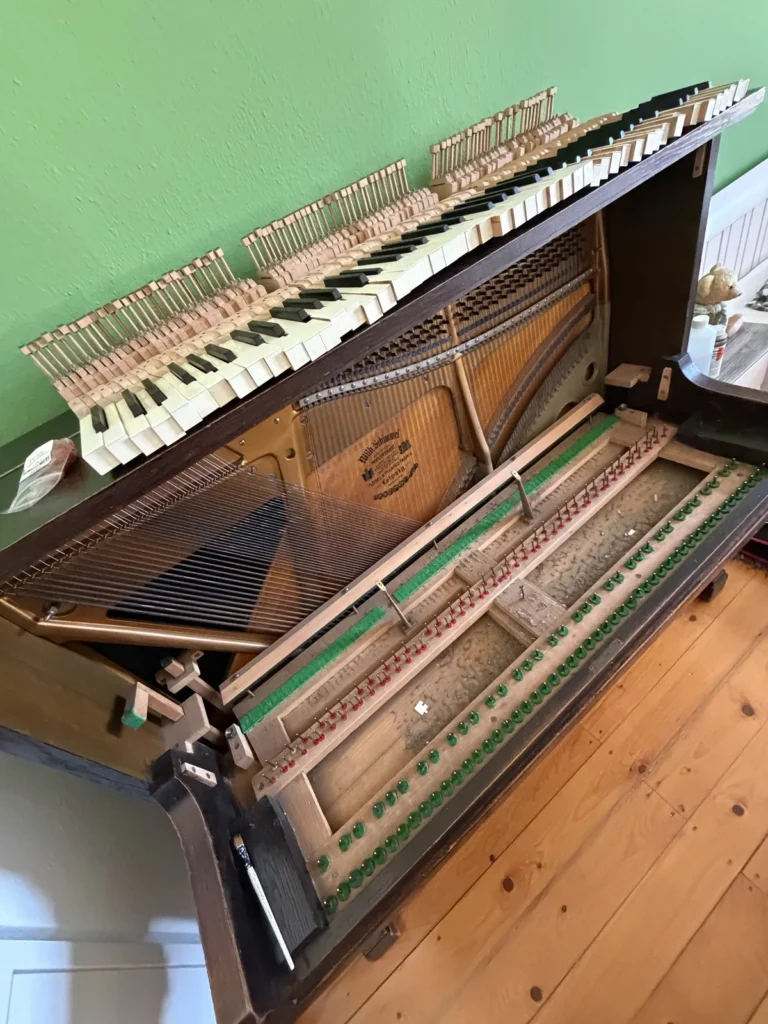
Piano & grand piano appraisal
Valuations, pre-purchase inspections and damage reports from a master piano maker – honest and impartial.
Learn moreWhat service does your piano need?
Whether you want a regular tuning, want a more precise feel or a major repair – I will advise you honestly and transparently.
Frequently Asked Questions about My Services
What is the difference between voice, regulation and voicing?
This is the most important question!
- When tuning, I bring the strings to the correct pitch (sound purity).
- When regulating, I adjust the action (the playing feel, the precision).
- When intoning, I edit the hammer head felt (the timbre – softer, more brilliant).
A tuning is always necessary. Regulation and voicing are fine work that raises the instrument to a higher level.
How often does my piano have to be tuned?
As a rule of thumb, I recommend: at least once a year. In very demanding environments (e.g. heavy use or underfloor heating) or for professional musicians, a tuning twice a year (in spring and autumn) is ideal for ensuring stability after heating periods.
My piano hasn’t been tuned for 10 years. Can you still save it?
Yes, in most cases. A piano that has not been tuned for so long has lost its tension. It is possible that it cannot be brought to the normal tuning (chamber tone A at 440 Hz) in a single pass. Often, two or three tunings are needed at shorter intervals to slowly rebuild the tension and stabilize the tuning. I would be happy to check the condition on site.
How much does a piano tuning cost you?
The cost of a tuning depends on the condition of the instrument. A regular, annual tuning is the standard. However, if the piano is extremely upset (see previous question) or if the vocal vortex are stiff, the effort can be higher. Please contact me for a transparent offer. My prices are fair and reflect my master’s qualification and the time I take for your instrument.
A button is stuck or not working. Is it worth repairing?
absolute. A clamping button is usually a small mechanical problem (e.g. a swollen axle due to humidity or a slipped component), which I, as a master piano technician, can often quickly fix on site. Such small repairs are important in order to maintain the joy of playing and are usually significantly cheaper than you assume.
How important is the humidity really?
It is the most important factor in maintaining the value of your piano. Too dry air (typically in winter by heating) is the biggest enemy. It makes the wood (especially the soundboard) dwindle, which can lead to cracks and ruin the vocal position. A constant, relative humidity between 45% and 60% is ideal. A simple hygrometer for control is a very good investment.