
Professional piano tuning in Dresden from the master
The pure sound of a piano is pure physics – thousands of kilos of traction, spread over 200 strings. This enormous pressure reacts sensitively to the smallest changes in its environment.
A piano tuning is therefore far more than the “make sure” of the tones.
As your master piano technician in Dresden, I see the tuning as the foundation of your joy of playing. It’s not just about hitting the chamber tone (A¹ = 440 Hz), but creating a stable, balanced tuning (a “good tempering”) that does justice to the character of its instrument and, above all, it holds.
This is the difference between a quick “support” and a sustainable master’s tuning.
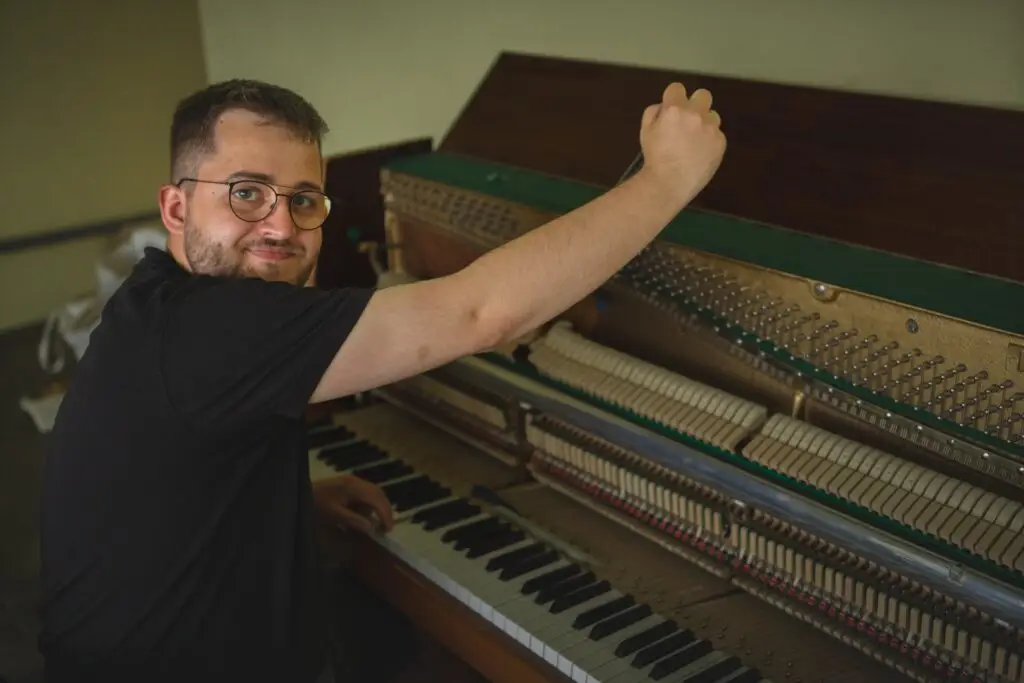
Choose your piano tuning

Basic piano tuning
159,00 €
- For regular tunings: Ideal for anyone who just needs a pure tuning of their instrument.
- Precise tuning: The instrument is tuned exactly to the current pitch.
- Mechanical check: A short function test ensures that the most important components work correctly.
- Efficient service: The core care for your piano is done compactly in about 1.5 hours.
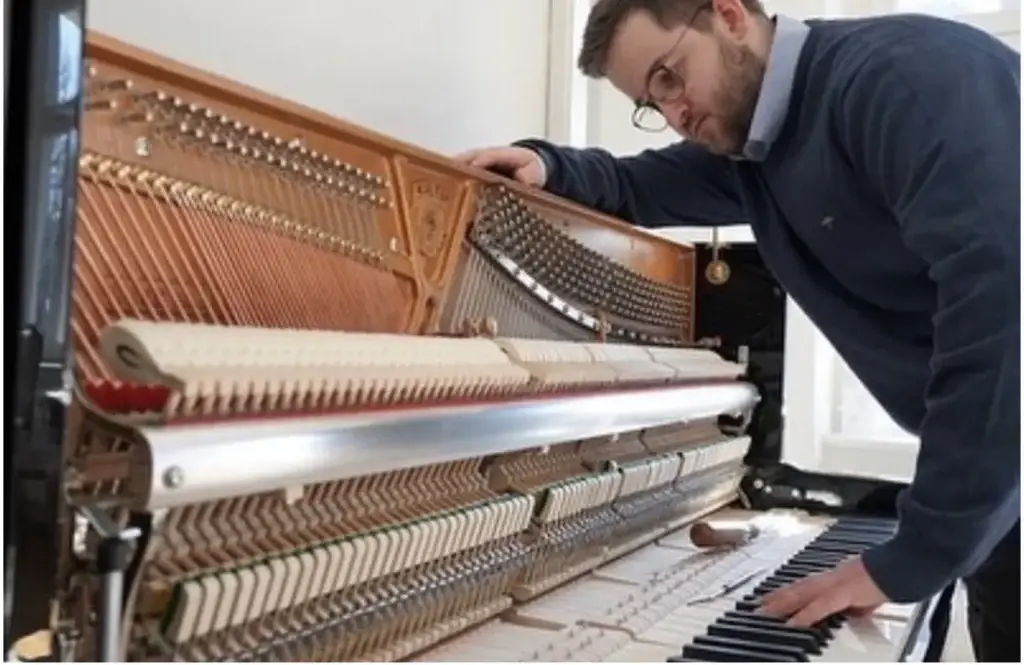
Standard piano tuning
359,00 €
- After long maintenance breaks: The perfect choice if the instrument has not been serviced for a long time.
- Sound & tuning: Professional tuning of the instrument for a harmonious sound image.
- Voicing (sound setting): The sound is finely adjusted so that all tones sound even and harmonious.
- Interior cleaning: The interior of the piano is freed from dust and dirt (total time required: approx. 3 hours).
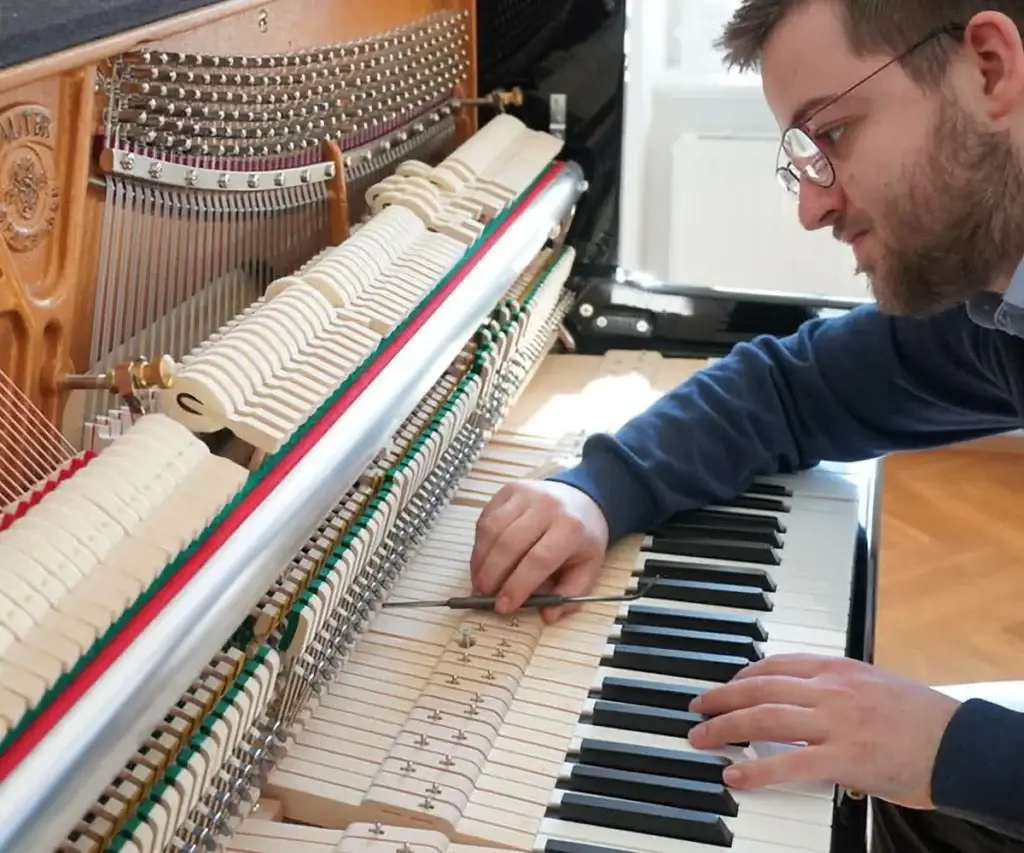
Master Tuning
649,00 €
- For the highest demands: The master package for everyone who simply wants the best for their instrument.
- Complete adjustment: Includes all basic and standard services including a profound, basic regulation of the action.
- Sound optimization (voicing): By machining the hammers, the character of the sound is specifically refined and beautified.
- Master Service: The all-round carefree package for the highest demands on sound and game type (time expenditure: approx. 6 hours).
free
Piano tuning in Dresden and the surrounding area
I tune your upright or grand piano at your home: in every district of Dresden, for example Striesen, Blasewitz, Gruna, Johannstadt, Neustadt, Loschwitz, Plauen, Löbtau, Pieschen or Klotzsche, and in nearby towns such as Radebeul, Coswig, Meissen, Moritzburg, Freital, Pirna and Heidenau.
The first 15 km of travel are free of charge. For places further away, just ask.
Why is a piano upset?
Your piano is a living instrument mainly made of wood. This wood “breathes” and reacts to its surroundings.
The biggest influencing factor is the fluctuating humidity, especially in the changing seasons:
- In winter (heating period): The air becomes dry. The wood (especially the soundboard) contracts. The string tension subsides, the piano sounds “too low”.
- In the summer: The air gets wetter. The wood expands, pushes the soundboard upwards and increases the string tension. The piano sounds “too high”.
A professional tuning is therefore not a “repair” in the actual sense, but active, necessary care. It is the most important individual contribution to the long-term value retention of your instrument.
The difference: a tuning from the master of the piano
Why is a tuning from a specialist so crucial? Because it doesn’t just matter that, but how it’s tuned.
- The stability (voice): Just because a sound sounds right doesn’t mean he’s still doing it tomorrow. The art of tuning lies in the correct “setting” of the vocal vortex. With precise technology, I ensure that the vertebrae sits stably in the tuning stick and the string keeps its tension.
- The Sound Quality (Aural & Digital): I agree Aural (by ear), supported by the most precise measurement software. Why both? Hearing allows me to adjust the tuning to the unique character of your instrument (the so-called “inharmonicity”). The device guarantees the perfect reference. This combination leads to the best possible sound result.
- The Master Check: While I’m voting, I always check your instrument for small irregularities. It’s often small things – a slightly jamming button, an approach of background noise – that I can often do directly as part of the tuning.
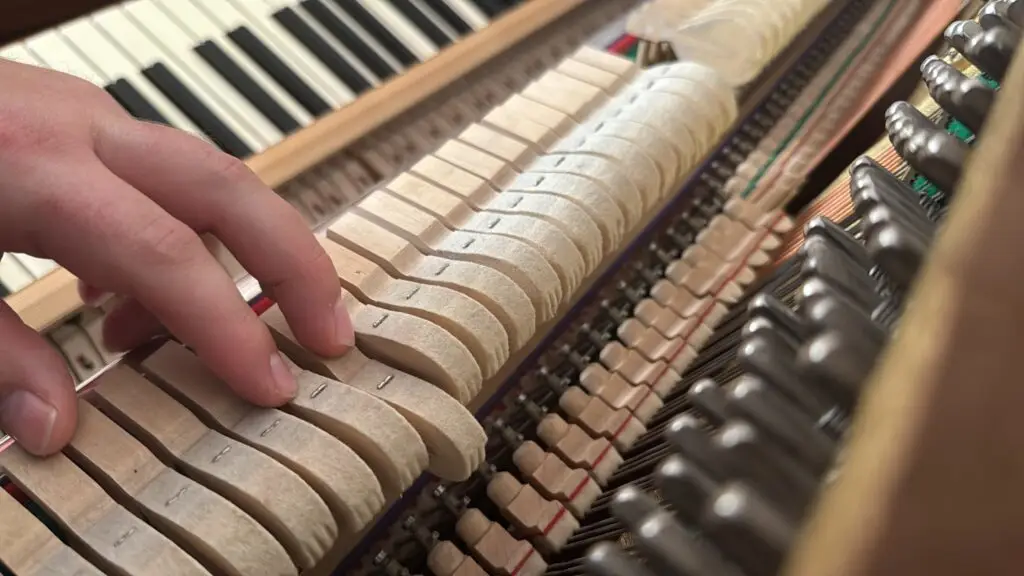
How often is a tuning necessary?
To maintain the value and stability of your piano, the following recommendations apply:
- at least: once a year. This is the minimum to keep the basic tension and keep the instrument playable.
- Ideal: twice a year. Preferably after the start and end of the heating period (e.g. in spring and late autumn). In this way, the greatest fluctuations are optimally compensated.
- Special cases: Entirely new instruments have to “set up” first and often require 3-4 tunings in the first two years. Instruments at locations with heavy climate impact (e.g. underfloor heating) or concert instruments also require shorter intervals.
Give your piano the right sound
Whether it’s an annual routine tuning or the rescue of a long-not tuned instrument – I’d be happy to advise you.
Frequently Asked Questions about Piano Tuning
How much does a piano tuning in Dresden cost?
The costs for a tuning consist of pure working hours and the journey. The price also depends on the condition: a regular, annual tuning is the norm. However, if a piano is extremely out of tune (e.g. 10 years has not been tuned), a “prior tuning” (higher-drawn) is often necessary before the fine tuning can take place, which takes more time. My prices are transparent, fair and reflect my master’s qualification and the calm I take for your instrument. Just contact me for a specific offer.
How long does a piano tuning last?
Please plan about 1 to 1.5 hours. A professional, stable tuning takes time and rest. In the case of very detuned instruments, the first appointment can also take longer.
My piano has not been tuned for 20 years. Is it still worth it?
In most cases: yes! It’s impressive how much sound potential is often still in “forgotten” instruments. With a piano that has not been tuned for so long, the tension must be slowly and often rebuilt in several steps (pre-tuning and fine tuning with a time-limited time) in order to protect the material. I would be happy to check the condition (especially the vocal vortex and the soundboard) on site and give you an honest assessment.
Do I have to pay attention to something special during the tuning?
The most important thing is rest. Tuning by ear requires maximum concentration. It would therefore be ideal if no loud background noise (such as vacuum cleaners or loud conversations) took place in the same room during the tuning. Please also ensure that the surface of the piano (note stand, lid) is free of objects.
You will find more answers on the Frequently Asked Questions page.